Treating Hyperpigmentation: Why Your Over-the-Counter Serums Might Be Failing You
Understanding Hyperpigmentation in South Africa
Hyperpigmentation—those stubborn dark spots, uneven patches, and 'mask-like' shadows on the face—is one of the most common and psychologically distressing skin concerns we see at Linksfield Laser Clinic. In the intense South African climate, the combination of high UV exposure and varied skin tones makes pigmentation management a complex, multi-layered task. But why do those expensive retail serums often fail to deliver results? In this guide, we dive deep into the science of melanin and why clinical intervention is often the only way to achieve a truly even skin tone.
The Biology of Melanin: How Pigment is Formed
To treat pigmentation, we must first understand melanogenesis—the process by which your skin produces pigment. Within the deeper layers of your skin (the basal layer), specialized cells called melanocytes produce melanin. This melanin is then packaged into 'melanosomes' and transferred to your skin cells (keratinocytes) to protect them from UV damage. Pigmentation occurs when these melanocytes become overactive or are 'triggered' by external or internal factors.
The Common Triggers in Johannesburg
- UV Radiation: The primary trigger. UV rays stimulate the enzyme Tyrosinase, which kicks melanin production into overdrive.
- Hormonal Changes: Often seen in pregnancy or with oral contraceptives, this leads to 'Melasma' or 'Chloasma'.
- Post-Inflammatory Response (PIH): Common after acne, cuts, or even aggressive at-home treatments. The skin overproduces pigment as it heals.
- Heat and Friction: Surprisingly, even the heat from cooking or a hot car in a Johannesburg summer can trigger certain types of pigmentation like Melasma.
The "Bottle Limit": Why Retail Skincare Often Fails
Many clients spend thousands of Rands on retail 'brightening' serums before visiting us. The reason these often fail isn't that they are 'bad' products, but rather because of the strict safety regulations governing over-the-counter (OTC) sales.
To ensure a product is safe for anyone to buy and use without medical supervision, manufacturers limit the percentage of active ingredients like Glycolic acid, Vitamin C, or Hydroquinone. While these may help brighten the very surface of the skin, they rarely have the molecular 'muscle' to reach the basal layer where the overactive melanocytes are actually located.
The Neostrata Clinical Advantage
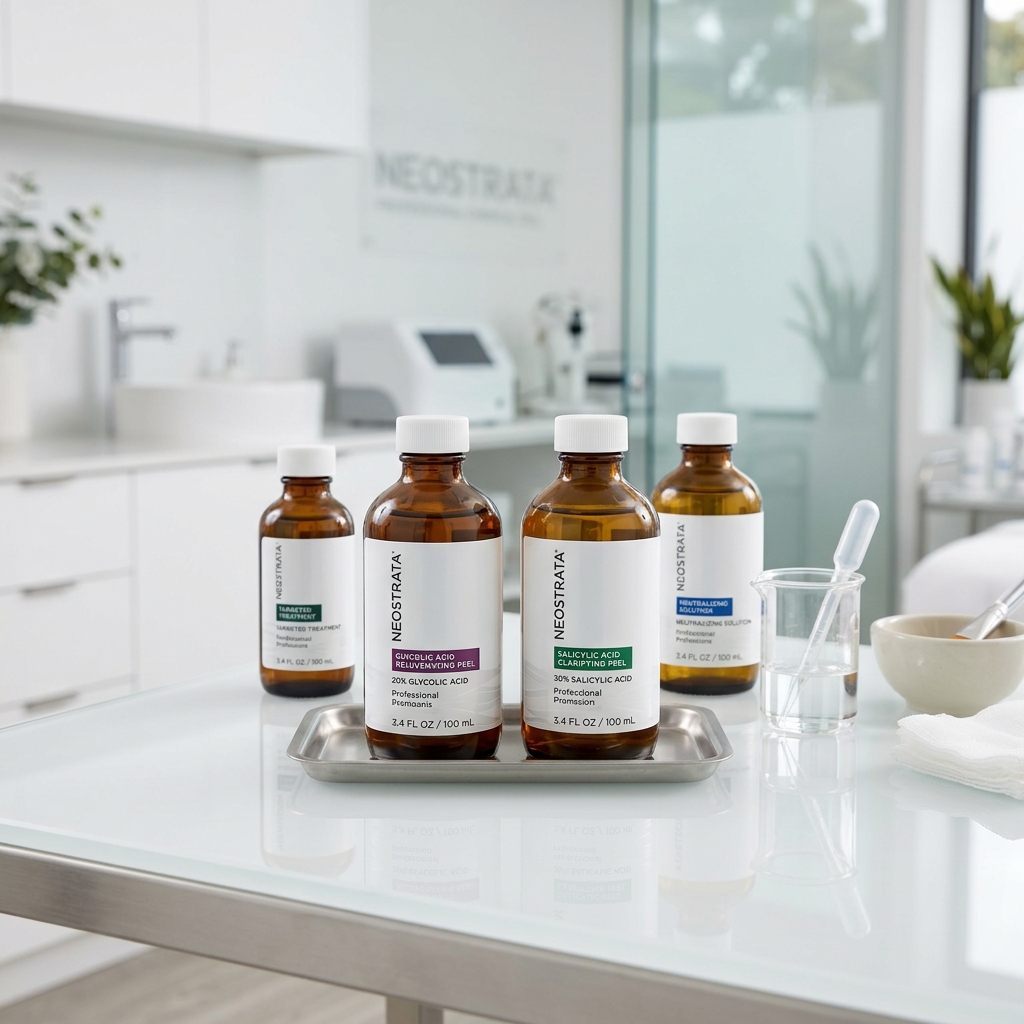
At Linksfield Laser Clinic, we utilize medical-grade Neostrata Chemical Peels. Unlike retail products, these clinical formulations have a significantly lower pH and higher concentration of Alpha Hydroxy Acids (AHAs). This allows the solution to penetrate the protective skin barrier and deliver active ingredients directly to the source of the pigmentation.
Comparison: Retail vs. Clinical Pigment Treatment
| Feature | Retail Pigment Serums | Clinical Neostrata Peels |
|---|---|---|
| Active Concentration | Typically 2% - 10% | Professional strengths (30% - 70%) |
| pH Level | ~3.5 to 5.0 (Less aggressive) | ~1.0 to 2.5 (High penetration) |
| Mechanism | Slow surface brightening | Deep-layer cellular restructuring |
| Results Timeline | 3-6 months for slight fading | Visible results in 3-5 sessions |
Classifying Your Pigmentation: Which One Do You Have?
Not all dark spots are created equal. Treatment success depends on accurate classification by a clinical professional.
1. Melasma (The 'Butterfly' Mask)
Characterized by symmetrical, blotchy patches on the forehead, cheeks, and upper lip. It is heavily influenced by hormones and heat. It is a 'chronic' condition, meaning it can be managed into remission, but requires strict lifestyle maintenance to prevent flare-ups.
2. Solar Lentigines (Sun Spots)
These are discrete, well-defined dark spots caused by years of UV exposure. They are very common on the hands and faces of Johannesburg residents. These respond exceptionally well to both peels and targeted laser treatments.
3. Post-Inflammatory Hyperpigmentation (PIH)
This is the dark mark left behind after a blemish or skin injury. In darker skin tones (Fitzpatrick 4-6), the skin produces excess melanin as a defense mechanism. Treating PIH requires a 'gentle but firm' approach to avoid triggering even more pigment through aggressive treatments.
The Role of Tyrosinase Inhibitors: Stopping Pigment at the Source
A crucial part of our clinical protocol involves the use of tyrosinase inhibitors. These are ingredients like Kojic Acid, Azelaic Acid, and Arbutin that help reduce melanin production. By using these in conjunction with our clinical peels, we can treat existing pigment while helping to prevent new pigment from forming.
Technical Guide: How to Safely Treat Pigmentation in Skin of Color
Treating pigmentation in South Africa requires specialized knowledge of darker skin tones. There is a common myth that chemical peels are 'dangerous' for dark skin. In reality, the wrong peel is dangerous. We use specific 'Mandellic' or 'Lactic' based peels that provide all the benefits of exfoliation and pigment suppression without the heat-induced risk of Post-Inflammatory Hyperpigmentation.
Scenario: Managing a Melasma Flare-up in Johannesburg
Imagine a patient, Sarah, who has managed her melasma perfectly throughout winter. As the Johannesburg summer hits, she notices the patches returning despite using sunscreen. Our analysis reveals that Sarah is using a chemical sunscreen, which converts UV into heat in the skin. For melasma patients, that heat is enough of a trigger. We switch Sarah to a mineral-only (Zinc/Titanium) SPF that reflects the rays and heat, and add a cooling clinical facial to her monthly routine. The result? Her melasma remains in check throughout the summer holidays.
"Treating pigmentation is like an iceberg. What you see on the surface is only a small part. Our professional peels and targeted home-care plans target the root of the problem to provide a lasting, even skin tone." - Linksfield Skin expert
Conclusion: A Commitment to Clarity
Achieving an even skin tone in Johannesburg is a marathon, not a sprint. It requires a combination of high-performance clinical treatments, expert diagnosis, and an unwavering commitment to sun protection. Whether you are dealing with years of sun damage or recent acne scarring, Linksfield Laser Clinic has the medical-grade tools and experience to revitalize your complexion.
Ready to reclaim your glow? Book your detailed skin analysis today and let's start your journey to pigmentation-free skin.
Extended Pigmentation FAQ
Will one chemical peel fix my pigmentation?
No. Pigmentation is layered deep within the skin. One peel will provide a beautiful glow, but a series of 3 to 6 sessions is necessary to penetrate to the source and see a 70-90% reduction in dark spots.
Does a chemical peel actually 'peel' my skin off?
Not necessarily. With Neostrata peels, you may experience mild flaking for 2-3 days, but 'shedding like a snake' is not required for the treatment to be effective. The AHAs work at a cellular level, even if the visible peeling is minimal.
Can I use hydroquinone-based creams?
Hydroquinone is a powerful skin lightener that should only be used under medical supervision. Misuse can lead to a paradoxical darkening of the skin (Ochronosis). We recommend safer, modern Tyrosinase inhibitors for long-term use.
Is it okay to start pigmentation treatment in summer?
Yes, provided you are 100% committed to wearing a clinical-grade mineral SPF 50+ every single day. If you cannot guarantee sun protection, it is better to wait for the cooler months.
Why are my dark spots getting darker after my first peel?
This is often a sign that the pigment is being 'lifted' to the surface of the skin before it sheds off. It is a normal part of the process and usually subsides within a few days.