Professional Microneedling vs At-Home Devices: What Changes the Risk?
They May Look Similar, but They Are Not Equivalent
Professional microneedling vs at-home devices is not a like-for-like comparison, even though both options use small needles and can look similar. The American Academy of Dermatology warns that at-home needling can irritate or damage skin and may spread infection when it pierces the surface. The important differences are control, sterility, technique, assessment and the ability to respond safely if the skin is not suitable.
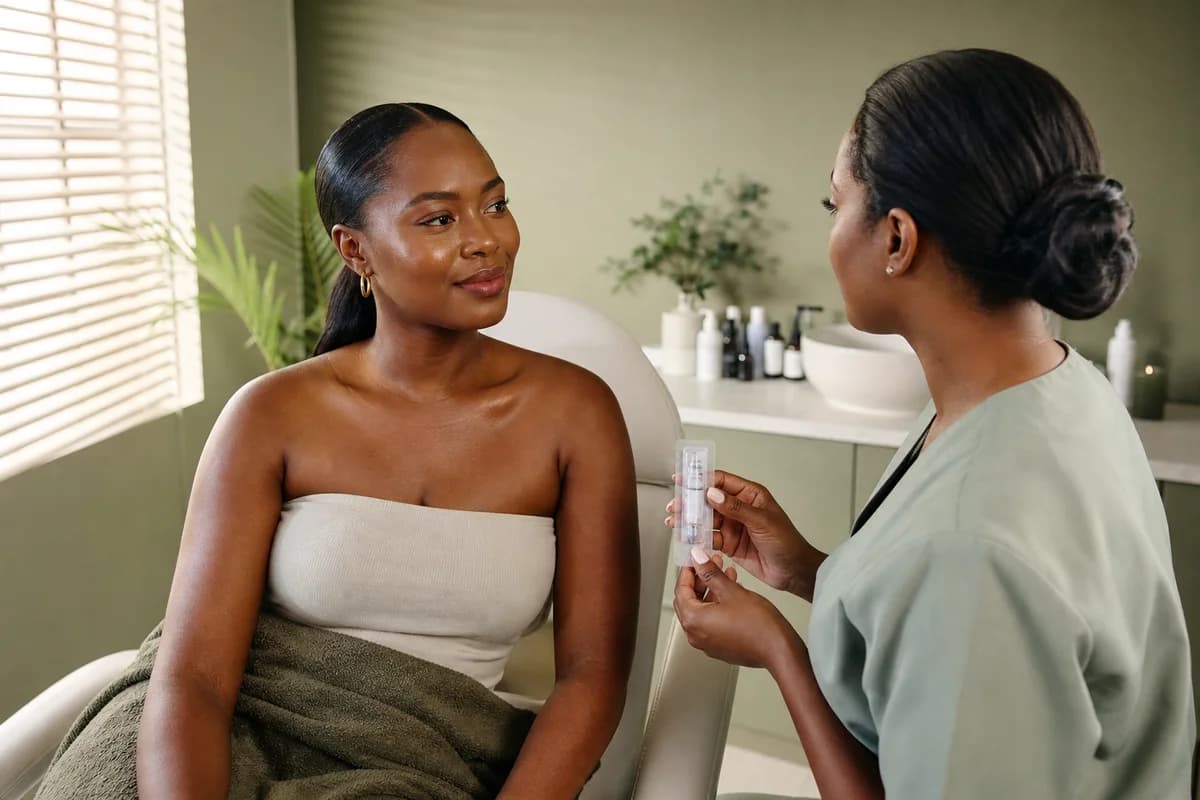
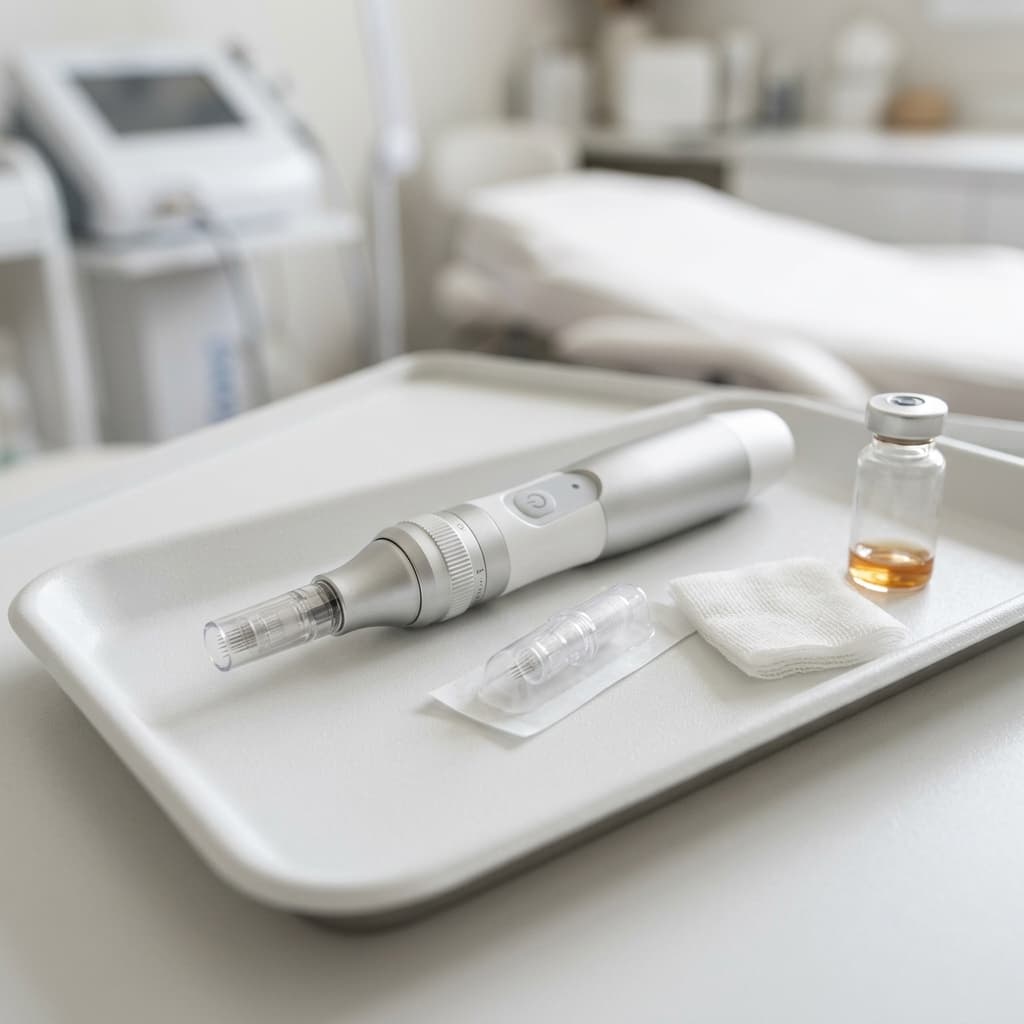
Professional microneedling is a controlled skin treatment. A therapist selects a sterile cartridge, adjusts the device for the area and works to a planned endpoint. Home use relies on the consumer to judge pressure, hygiene, frequency and whether the skin should be treated at all.
Hygiene Is More Than Cleaning the Handle
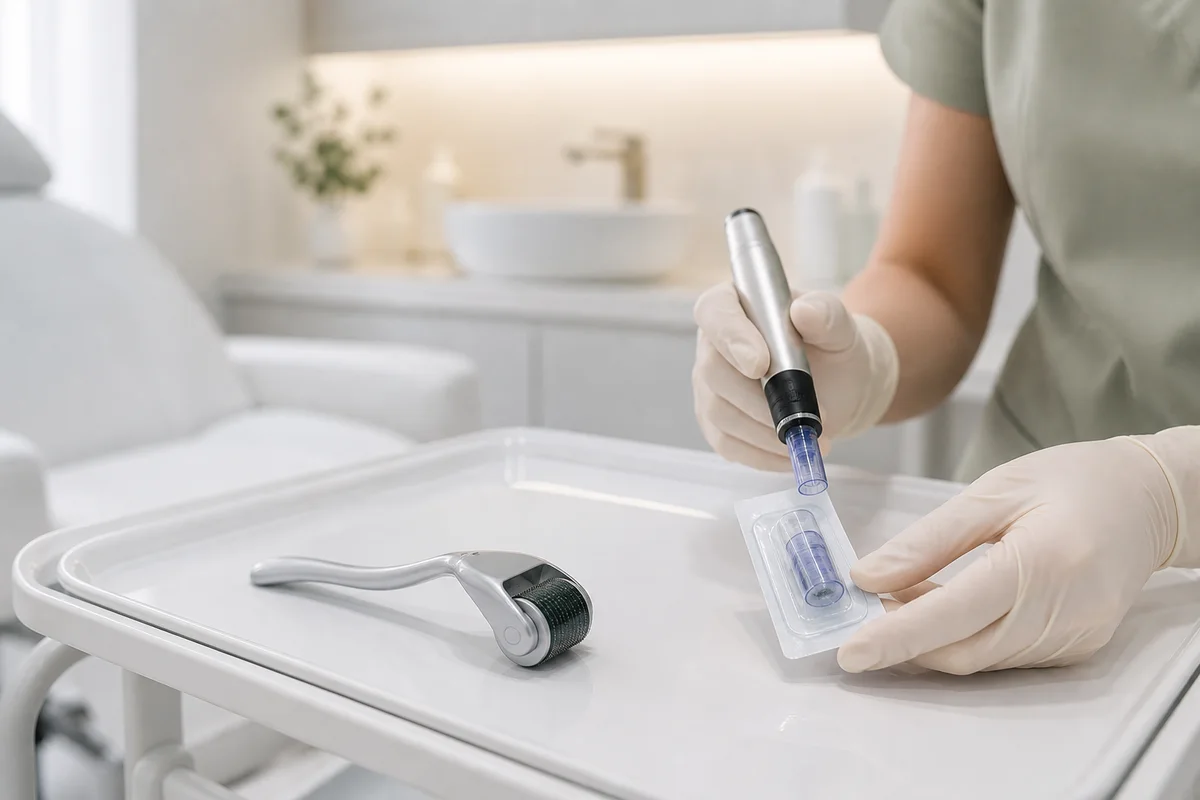
Needles cross the skin barrier. A professional setting uses single-use sterile cartridges, skin preparation and infection-control procedures. A roller used repeatedly at home can become blunt, damaged or contaminated, even when it looks clean.
Sharing a device is unsafe. So is rolling over active acne, cold sores, irritated skin or an infection. If a home device causes persistent swelling, pus, spreading redness, severe pain or blistering, seek medical advice rather than treating it with more skincare products.
Professional Devices Offer Better Control
A professional pen can be adjusted for different areas and concerns. The forehead, cheeks, scars and delicate facial zones do not necessarily need the same approach. A therapist can also stop if the skin responds unexpectedly.
Home rollers provide far less control over depth and angle. Repeatedly chasing redness or bleeding is not a sign of a better treatment. It can increase inflammation, pigmentation and scarring risk.
Assessment Comes Before Needling
Texture that looks like acne scarring may exist alongside active acne, eczema, rosacea or a weakened skin barrier. Pigmentation can also have different causes. A consultation helps identify when microneedling may be useful and when another approach or medical referral makes more sense.
Tell the practitioner about medication, a history of cold sores, raised scars, recent isotretinoin use, pregnancy, immune conditions and previous reactions. Do not stop prescribed treatment without speaking to your healthcare professional.
What About DIY Microneedling Serums?
A product that is safe on intact skin is not automatically intended to enter fresh microchannels. Fragrance, acids, retinoids and unapproved mixtures can irritate treated skin. Professional treatment should use products chosen for the procedure and clear aftercare.
For the first stage of healing, simple care is usually better: gentle cleansing, recommended hydration, no picking, no aggressive actives and diligent sun protection.
Results and Cost
Professional treatment also creates a documented plan. The practitioner can record the device, depth, passes, response and aftercare, then adjust later sessions instead of repeating the same approach regardless of healing. That follow-up matters when the goal involves scars, pigmentation or texture rather than a temporary surface glow.
A home roller may look cheaper per use, but cost should include replacement devices, products and the risk of treating the wrong concern. Professional microneedling costs more because it includes assessment, controlled equipment, sterile consumables and follow-up guidance.
Neither route should promise instant scar removal. Collagen remodelling takes time, and a professional course is normally spaced to allow healing between sessions.
When Professional Treatment Is the Better Choice
Choose professional assessment if your concern involves acne scars, pigmentation, deeper lines, stretch marks, sensitive skin or a history of poor healing. It is also the safer starting point when you are uncertain what the skin concern actually is.
Book a microneedling consultation in Bedfordview or learn more about professional microneedling at Linksfield Laser Clinic.
Professional Microneedling vs At-Home Devices FAQ
Can I share a dermaroller?
No. A needling device should never be shared.
Is bleeding necessary for microneedling to work?
No. Treatment intensity should match the concern and area; bleeding is not a target to chase.
Can I apply retinol immediately afterwards?
Do not apply strong active products unless your practitioner specifically advises it.
Explore the treatment
Microneedling treatments