How Often Should You Get Dermaplaning?
Short answer: Linksfield Laser Clinic's dermaplaning service page suggests an appointment every three to four weeks. Treat that as a starting point for a conversation, not a deadline for your face. Dermaplaning removes surface skin cells and fine facial hair. Whether and when to repeat it depends on how your skin responded, what else you use on it, and whether the treatment still serves a goal you care about.
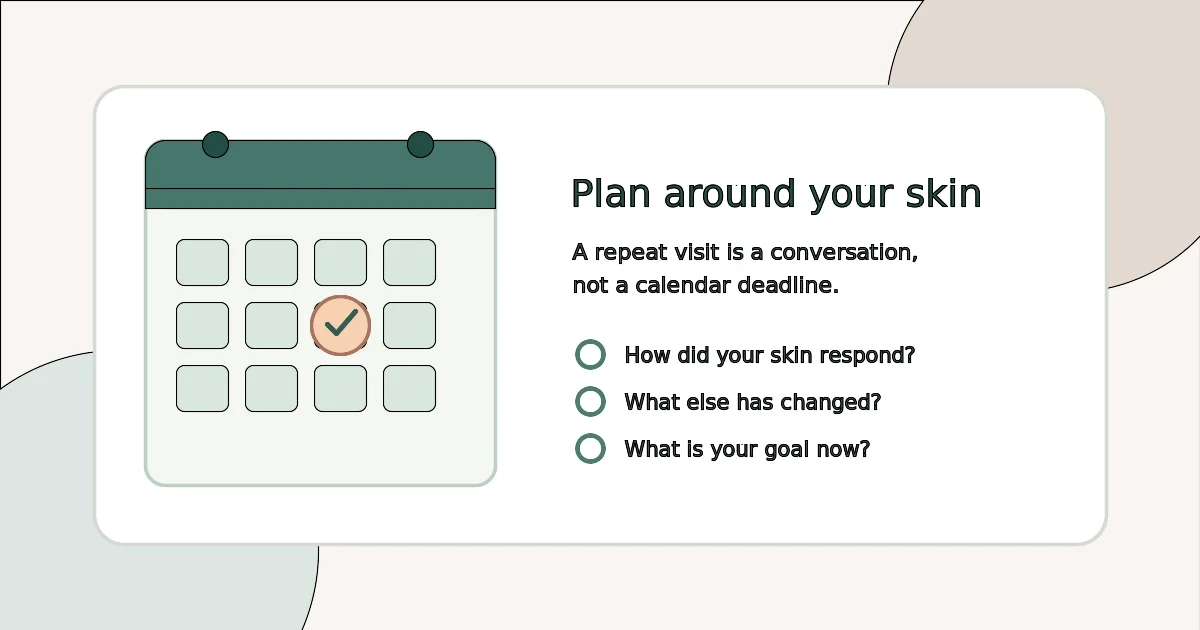
If you found this page while searching "how often should you dermaplane", you may be trying to decide between a monthly booking and waiting until the skin or peach fuzz feels different. Neither the calendar nor hair regrowth alone tells you that another exfoliating appointment is appropriate. This guide helps you ask better questions; it cannot assess your skin remotely.
Where does the three-to-four-week suggestion come from?
The clinic currently describes dermaplaning as a professional exfoliation treatment and recommends a three-to-four-week interval on its service page. That is the clinic's general recommendation, not a rule established for every client or a guarantee that a repeat visit will improve the result. Ask the person who treated you why a particular interval fits your skin, especially if the first visit left it uncomfortable.
Dermaplaning is a surface treatment. It does not permanently remove facial hair or change the follicle to make fuzz grow back thicker. You do not have to return at the first sign of regrowth. Equally, spacing appointments further apart does not mean you have failed a course. There is no fixed series that everyone needs to complete.
Check how the previous appointment went before rebooking
Think about the first few days after treatment: Was your skin comfortable? Was there redness or tenderness, and did it settle as discussed? Did you use the aftercare you were given without a problem? Cleveland Clinic notes that skin can be red, swollen or slightly tender after dermaplaning and advises contacting the provider if swelling worsens or lasts longer than expected. That is more useful than calling the procedure "zero downtime" for every person.
If your skin remains sore, unusually reactive, broken or inflamed, do not simply book the next exfoliation because a month has passed. Contact the treating provider for individual advice. If you are concerned about a significant or worsening reaction, seek appropriate medical assessment. For a checklist of questions about products, sun exposure and reactions after a session, see our dermaplaning aftercare guide.
What else has your skin been through?
Tell the practitioner if you have used exfoliating acids, retinoids or prescription skincare, or had a peel, waxing or another facial treatment since the last appointment. Do not stop a prescribed product on the strength of a blog post. Instead, ask the prescriber and treating professional how your routine and proposed dermaplaning should be coordinated. If you have active irritation, acne lesions, a rash or a recent sunburn, ask whether the skin should be assessed or the appointment delayed rather than assuming a gentle-sounding facial is harmless.
The same Cleveland Clinic guidance describes a pre-treatment review of goals, skin health and health history. Those checks still matter at a repeat visit: your skin today may not be identical to your skin at the first appointment. Ask what would make the provider postpone treatment, what side effects to watch for, and what preparation or aftercare they would recommend for you. This article does not set a universal waiting period between different procedures.
Repeat for a reason, not just a date
Some people want the feel of a freshly exfoliated surface; others want less visible peach fuzz before makeup or an event. Decide which benefit mattered to you after the first visit and whether it was worth repeating. Dermaplaning is not a treatment that removes deep acne scars or permanently stops hair growth. If your main concern is a scar, persistent pigment change or a skin condition, ask for an assessment of that concern rather than booking more surface exfoliation by default.
For a wedding or photography date, do not schedule your first-ever session at the last minute based on a generic monthly rule. Skin reactions vary. Our pre-event dermaplaning guide addresses that separate timing decision. If you are deciding between professional exfoliation and shaving your face yourself, read the professional versus at-home comparison; this article is about repeat frequency after a professional appointment.
Questions to ask before another booking
- How did my skin respond last time, and does it look ready for another session now?
- Why would three to four weeks, a longer gap or no repeat visit fit my goal?
- Do my current products, medicines or other skin treatments change the plan?
- What reactions would mean I should call you instead of waiting for the next visit?
- What is the current appointment price and what, if anything, would be combined with dermaplaning?
The best interval is one you can explain in terms of your skin and goal, not just a recurring calendar reminder. Contact Linksfield Laser Clinic in Bedfordview to ask for an assessment and a current quote before arranging your next professional dermaplaning appointment. If you have a current reaction, contact the provider who treated you or an appropriate healthcare professional instead of waiting for a routine booking.
Explore the treatment
Dermaplaning treatments