Dermaplaning vs. At-Home Shaving: Why the Professionals Produce Better Results
The 'Peach Fuzz' Phenomenon: A Clinical Perspective
In recent years, "face shaving" has become a viral sensation on social media, with millions of people using small, plastic razors to remove vellus hair (peach fuzz) at home. However, while it might look satisfying in a video, there is a vast clinical difference between at-home shaving and professional dermaplaning. One is a basic hair removal chore; the other is a sophisticated medical-grade exfoliation treatment. In this guide, we dive into the biology of facial hair, the physics of the blade, and why your skin deserves the clinical touch of Linksfield Laser Clinic.

The Biology of Facial Hair: Vellus vs. Terminal
To understand dermaplaning, we must understand the two types of hair on the human body:
- Vellus Hair (Peach Fuzz): This is the fine, translucent hair that covers most of the face and body. Its purpose is to help regulate body temperature and protect the skin. Vellus hair follicles do not have sebaceous glands attached, and the hair itself is extremely thin.
- Terminal Hair: This is the thicker, pigmented hair found on the scalp, underarms, and pubic area. In men, facial hair is primarily terminal.
Professional dermaplaning is specifically designed to target vellus hair and the buildup of dead skin cells (the stratum corneum). It is not a treatment for thick, terminal facial hair, which is better addressed with laser hair removal.
The Physics of the Blade: Precision vs. Plastic
The biggest difference between at-home shaving and clinical dermaplaning lies in the tool itself. At-home razors are often made of cheap, duller steel with a safety 'guard' that prevents the blade from getting close to the skin. This results in the hair being 'tugged' and the skin being unevenly scraped.
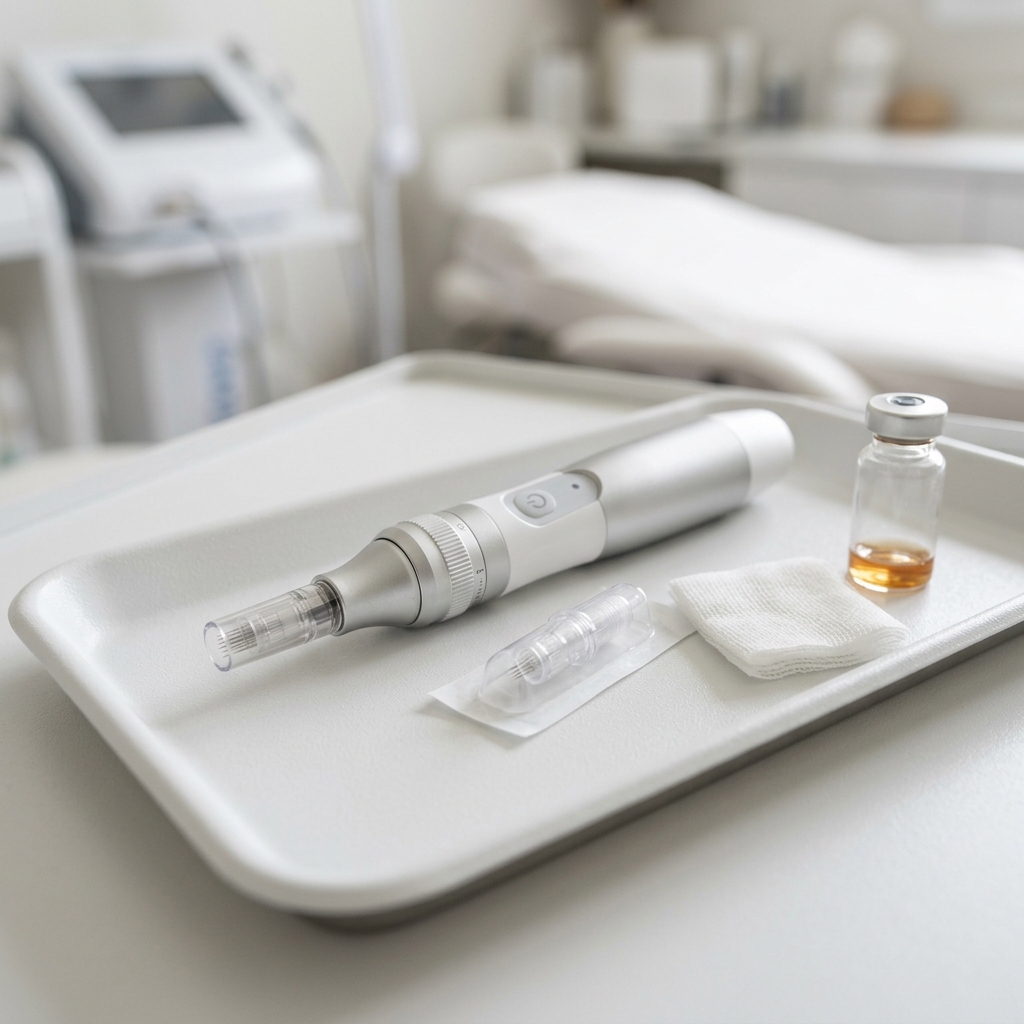
At Linksfield Laser Clinic, we use a sterile, surgical-grade 10-gauge scalpel. This blade is incredibly sharp and is held at a precise 45-degree angle. This allows the aesthetician to not only remove the vellus hair but to gently and safely scrape away weeks of accumulated dead skin cells, debris, and environmental toxins that daily washing misses.
Dermaplaning is Exfoliation First, Hair Removal Second
The primary goal of professional dermaplaning isn't just to get rid of peach fuzz—it's to achieve a level of exfoliation that triggers cellular renewal. By removing the dead outer layer of the skin, we are sending a signal to the deeper layers to produce new, healthy cells. This results in:
- Enhanced Product Penetration: Without the barrier of dead skin and hair, your expensive medical-grade serums can actually reach the deeper layers where they are needed.
- Instant Radiance: Dead skin cells make the face look 'flat' and dull. Removing them reveals the natural, light-reflecting glow of fresh skin.
- Flawless Makeup Application: Makeup no longer 'clings' to peach fuzz or dry patches, allowing for a smooth, airbrushed finish.
Myth-Busting: "Will It Grow Back Thicker and Darker?"
This is the most common fear we hear. The short, scientific answer is: No. Shaving or dermaplaning can only affect the hair above the skin's surface. It has no physical way to change the biology of the follicle or the thickness of the hair.
The reason people think it grows back thicker is due to the 'blunt end' phenomenon. When a hair naturally tapers to a point, it feels soft. When you cut it with a blade, you create a flat, blunt edge. As that blunt edge moves out of the skin, it can feel slightly 'stubbly' for a day or two, but the hair itself is exactly the same as it was before.
The Dangers of 'DIY' Face Shaving
While DIY shaving seems harmless, we often see patients coming into the clinic with complications from at-home attempts:
- Micro-tears and Infection: Non-sterile, dull blades can cause microscopic tears in the skin barrier, leading to breakouts and infections.
- Irritation and Redness: Improper technique and the wrong angle can lead to 'razor burn' on the delicate facial skin.
- Aggravating Existing Conditions: Shaving over active acne or rosacea can significantly worsen these conditions and potentially cause scarring.
The Clinical Safety Standard at Linksfield
When you book a dermaplaning session with us, you aren't just getting a shave. You are getting a full clinical treatment that includes:
- Double Cleansing: To ensure the skin is completely free of surface oils.
- Skin Assessment: To ensure there are no contraindications like active breakouts or sensitized areas.
- Sterile Procedure: Using single-use, medical-grade scalpels in a controlled environment.
- Post-Care Infusion: We follow the treatment with a soothing Hyaluronic Acid mask, taking advantage of the increased absorption to deeply hydrate the skin.
"I used to use those little plastic tinkles at home, but I never got the 'glow' everyone talked about. After my first professional dermaplaning at Linksfield, I realized what I was missing. My skin has never been this smooth, and my foundation looks like art." - Linksfield Client Testimonial, 2026
Scenario: Preparing for a High-Definition Event
Imagine you have a high-profile corporate shoot or a wedding in the bright Johannesburg sun. Even the best foundation can look textured when vellus hair and dry patches catch the light. A dermaplaning session 48 hours before the event ensures that your skin is a perfectly smooth canvas. It eliminates the 'fuzz' that often shows up in high-intensity flash photography and ensures your skin looks radiant from every angle.
Aftercare: Protecting Your 'Open' Skin
Because dermaplaning removes the protective outer layer of dead skin, your 'fresh' skin is temporarily more vulnerable. Proper aftercare is non-negotiable:
- Strict Sun Protection: You must wear a medical-grade SPF 50+. Your skin is more susceptible to UV damage during the first 48 hours.
- Gentle Routine: Avoid active acids (AHA/BHA) or Retinol for 3-5 days.
- Hydration Focus: Use a high-quality serum to lock in moisture while the skin barrier resets.
Conclusion: Invest in Professional Precision
While at-home trends come and go, professional clinical standards remain the only way to achieve consistent, safe, and truly transformative results. Dermaplaning is an incredible tool for total skin rejuvenation, but it requires the precision of a trained hand and the quality of a medical blade. At Linksfield Laser Clinic, we pride ourselves on delivering that precision every single time.
Ready to see your smoothest skin ever? Book your Professional Dermaplaning session today and experience the clinical difference.
Dermaplaning FAQ
How often should I get dermaplaning?
We recommend a session every 4 to 6 weeks. This aligns with your skin's natural 30-day renewal cycle and ensures your skin remains consistently exfoliated.
Can I have dermaplaning if I have active acne?
No. We cannot perform dermaplaning over active, inflamed breakouts as it can spread bacteria and cause further irritation. We recommend a chemical peel first to clear the acne.
Is dermaplaning painful?
Not at all. Most clients find the sensation quite relaxing, similar to a gentle scraping or a very light tickle. There is no downtime and no pain.
Can I do dermaplaning and a chemical peel in the same session?
Yes! This is often called a 'Dermaster' treatment. The dermaplaning removes the barrier of dead skin, allowing the peel to penetrate even deeper for enhanced results.
Will dermaplaning make my skin sensitive?
Your skin may feel a bit tight for the first 24 hours, but as long as you follow our hydration and SPF instructions, you should not experience any lasting sensitivity.
Explore the treatment
Dermaplaning treatments