Laser Hair Removal and Medication: Retinoids, Antibiotics and What to Disclose
Laser Hair Removal and Medication: What Must You Disclose?
Laser hair removal and medication need an individual review. There is no safe universal list of medicines that every person must stop before treatment. The right action depends on the medicine, dose, treatment area, reason it was prescribed, skin condition and device. Tell the clinic about every prescription, over-the-counter medicine, supplement and topical product, and never stop prescribed treatment without the prescriber's advice.
The American Academy of Dermatology's preparation guidance specifically tells patients to disclose isotretinoin and all other medicines before laser hair removal.
Why Medication Disclosure Matters
Some medicines and supplements can increase sensitivity to light, alter healing, affect bruising or change the skin condition being treated. Other medicines may be completely compatible with treatment. A name alone is not always enough: the clinic may need to know the strength, how it is taken, when it was started and why.
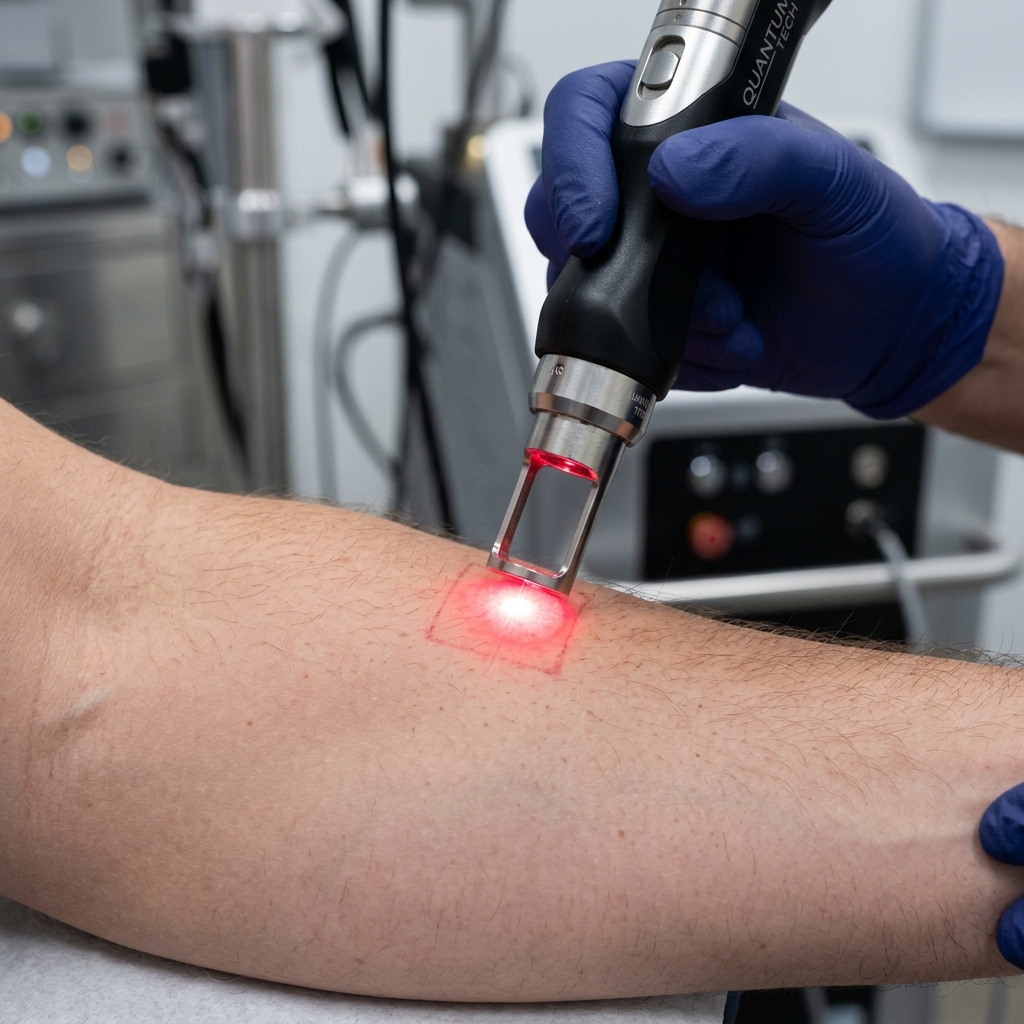
A patch test helps observe a small area under planned settings, but it does not cancel a known contraindication or guarantee that a later full treatment will cause no reaction.
Retinoids and Laser Hair Removal
Retinoids include prescription isotretinoin and topical products such as tretinoin, adapalene and cosmetic retinol. These are not interchangeable. A topical product used on the face may matter differently from an oral medicine affecting the whole body.
Tell the therapist the exact product, strength, treatment area and last use. Do not use a social-media rule such as “stop for three days” as medical advice. The prescribing professional and treating clinic should decide whether treatment proceeds, is modified or is postponed.
Antibiotics and Photosensitivity
Some antibiotics can make skin more sensitive to light, while others do not have the same effect. The underlying infection also matters: active infection, fever, broken skin or inflammation in the treatment area may be reasons to postpone regardless of the medicine.
Provide the exact antibiotic name and course dates before the appointment. The clinic may ask for clearance or recommend waiting. Finish or change antibiotics only as directed by the person who prescribed them.
Other Products to Mention
- Acne medicines and medicated washes.
- Hormonal medicines or treatments that may affect hair growth.
- Blood-thinning medicines, aspirin and supplements that affect bruising.
- Products containing acids, retinoids or strong exfoliants used on the treatment area.
- Herbal products, including those marketed for mood, sleep, hormones or skin.
- Recent numbing creams or planned topical anaesthetics.
The FDA has warned about certain high-strength topical numbing products marketed for cosmetic procedures. Read the FDA topical pain-product warning and do not self-apply an unapproved numbing product before treatment.
Bring This Information to Your Consultation
- Medicine or product name and strength.
- Whether it is oral, injected or applied to the skin.
- Reason for use and prescribing professional.
- Date started, date stopped if applicable, and any recent dose change.
- Previous light sensitivity, rash, blistering, slow healing or pigmentation.
Do Not Hide Medication to Keep an Appointment
Postponing a session is inconvenient, but a preventable burn or pigment change is worse. A professional clinic should prefer complete information over a rushed treatment. If the advice from your prescriber and laser provider differs, pause and ask them to clarify rather than choosing the answer that keeps the booking.
See the laser safety guide and guidance for darker skin tones for more context.
Medication and Laser FAQ
Can I have laser hair removal while using retinol?
It depends on the product, strength, area and your skin. Disclose it before treatment and follow individual instructions.
How long after antibiotics can I have laser?
There is no universal interval. The antibiotic, condition treated and skin response all matter.
Should I stop prescription medicine for laser?
Never stop prescribed medicine without speaking to the prescriber.
Is a patch test enough if a medicine causes photosensitivity?
No. A patch test is one part of assessment and does not override a contraindication.
Book a consultation and test patch and bring a complete medication and skincare list.