Laser Hair Removal for Fine Facial Hair: Does It Work?
Laser Does Not Treat Every Hair Equally
Laser hair removal for fine facial hair depends on whether the follicle contains enough pigment to provide a reliable target. The American Academy of Dermatology explains that laser works through the pigment in suitable hair and that multiple sessions are required. This means dark, coarse hair generally creates a clearer target than soft, fine or pale hair. The distinction is especially important on the face, where coarse chin hairs can sit close to almost invisible peach fuzz.
A responsible consultation should identify which hairs are likely to respond before treatment starts. Treating an entire facial area simply because some coarse hairs are present may not be the right plan.
What Is Peach Fuzz?
Peach fuzz is the everyday name for vellus hair: short, fine and often lightly pigmented hair that covers much of the face and body. It is normal and helps protect the skin. Because it contains little pigment and is very thin, it may not absorb enough laser energy for reliable reduction.
Terminal hair is thicker, longer and usually darker. Coarse upper-lip, chin, jawline or neck hair is more likely to behave as a useful laser target, although suitability still depends on skin tone, hair colour and medical history.
Why Treating Fine Hair Needs Caution
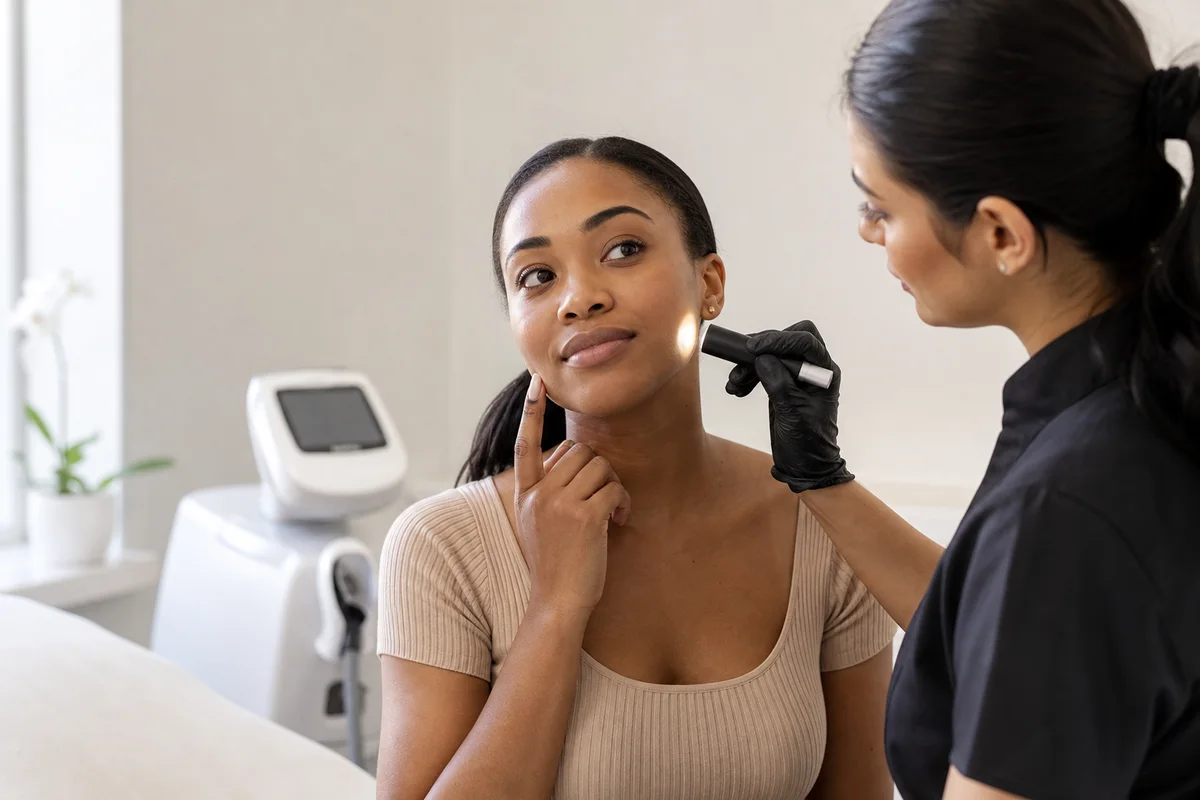
A cautious assessment separates clearly visible coarse hairs from surrounding vellus hair. Photographing the area in consistent lighting and agreeing on exact treatment boundaries can help the client and therapist track the intended target instead of gradually expanding treatment onto unsuitable hair.
Fine facial hair can respond unpredictably. In some situations, light-based treatment of unsuitable facial hair has been associated with increased or coarser-looking growth around the treated area, known as paradoxical hair stimulation.
This does not happen to every client, but it is a reason to avoid casual treatment of soft facial fuzz. Hormonal growth, skin tone, device type and treatment settings should be considered during assessment.
Can the Coarse Hairs Be Treated Separately?
Often, the most sensible plan is to focus on clearly suitable coarse hairs rather than blanket-treating the face. A test patch and progress review can help confirm whether the selected area is responding as expected.
If facial growth may be hormonal, maintenance may be needed because laser reduces existing suitable hair but cannot stop hormones from stimulating new follicles. Sudden or rapidly changing facial hair should be discussed with a doctor.
What About Blonde, Red, Grey or White Hair?
These colours contain less of the pigment that most hair-removal lasers target. Results may be poor even when the hair feels coarse. Be cautious of anyone guaranteeing removal without assessing the hair in person.
Depending on the hair, area and goal, alternatives may include trimming, dermaplaning for temporary removal of facial fuzz, or electrolysis from an appropriately qualified provider.
Questions to Ask Before Facial Laser
- Is my hair coarse and pigmented enough to be a suitable target?
- Which exact hairs and facial zones will be treated?
- Could hormones be influencing the growth?
- Will you perform a consultation and test patch?
- How will progress be reviewed?
- What result and maintenance should I realistically expect?
Get an Honest Suitability Assessment
Linksfield Laser Clinic uses LightSheer diode technology and assesses hair, skin tone and treatment area before recommending a course. If laser is unlikely to help fine facial hair, the consultation should say so.
Book a free consultation and test patch, or compare facial options in our guide to upper-lip and chin laser hair removal.
Laser Hair Removal for Fine Facial Hair FAQ
Can laser remove peach fuzz?
Very fine, lightly pigmented vellus hair is often a poor laser target.
Can I laser only coarse chin hairs?
A therapist may be able to plan treatment around suitable coarse hairs after assessing the area.
Will shaving make facial hair thicker?
Shaving cuts hair at the surface and does not change the follicle or create more hairs.
Explore the treatment
Laser hair removal in Johannesburg