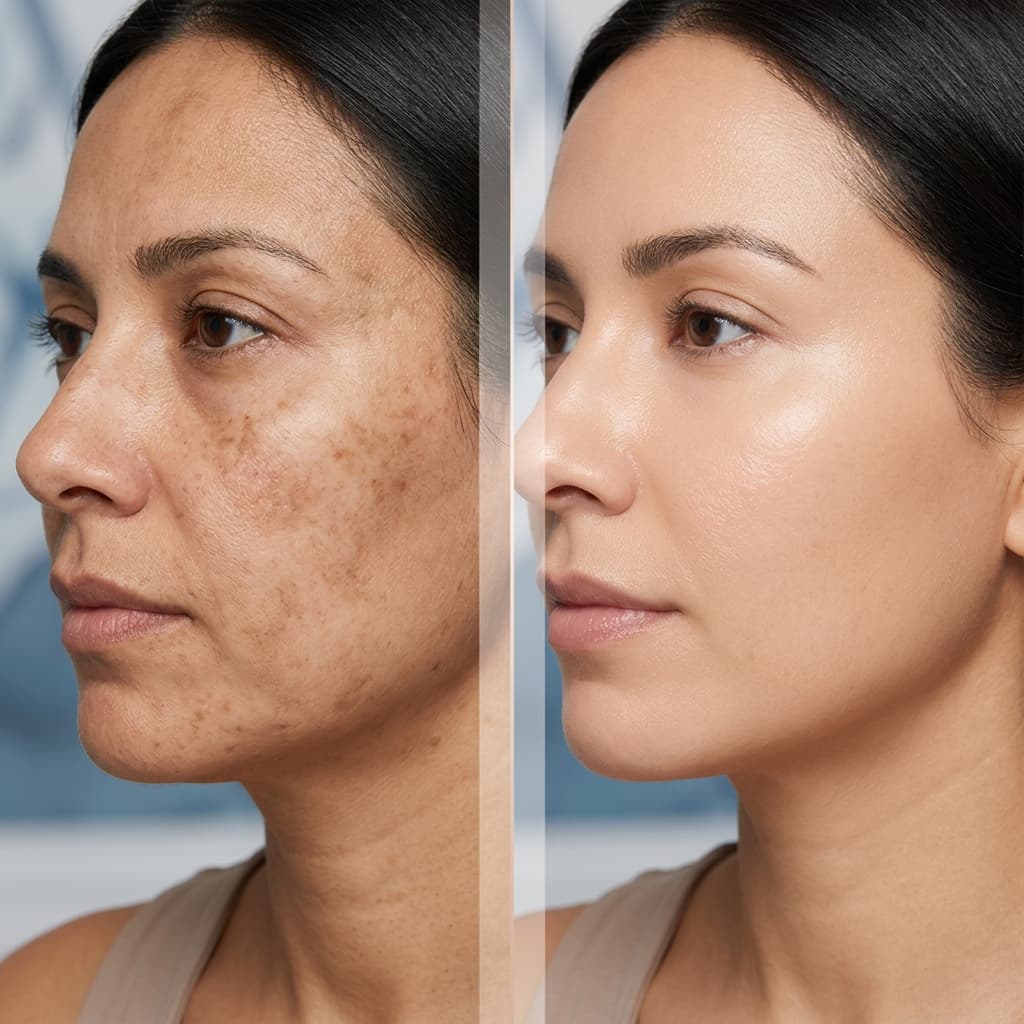
How Long Does Waxing Last? A Guide to Lasting Smooth Skin
So, you’re wondering, how long does waxing last? The simple answer is that a professional wax can leave your skin feeling wonderfully smooth for anywhere between 3 to 6 weeks. This isn't like shaving, which just trims the hair at the surface and leaves you reaching for the razor again in a day or two. Waxing gets right to the source, pulling the hair out from the root. In fact, many people ask, how long does waxing last and are surprised by how long the results can truly be.
This single action completely resets the hair's growth cycle, giving you weeks of that silky-smooth feeling instead of just a fleeting moment.
Your Timeline for Smooth Skin After Waxing
To really get a feel for how long your wax will last, it helps to look past those first few glorious weeks of smoothness. The long-lasting results are all thanks to removing hair deep from within the follicle, a far more effective method than just shaving the surface. Here in South Africa, especially in lively areas like Johannesburg and Bedfordview, this is exactly why so many people prefer waxing.
When considering how long does waxing last, it's essential to factor in your hair growth cycle and the treatment area.
Local insights show that waxing can keep skin hair-free for 2 to 8 weeks, completely outshining the brief 1-3 day results from shaving. That extended time is because the follicle literally needs a break to recover before it can even think about producing a new hair. You can dig into more details in this report on the regional hair removal market.
In general, understanding how long does waxing last helps set realistic expectations for hair removal.
Of course, the duration of your smooth skin can also change quite a bit depending on the area you get waxed. Different parts of your body have their own unique hair growth cycles, which naturally affects how quickly you'll notice any regrowth. For example, facial hair often makes a comeback faster than leg hair, thanks to hormones and a speedier follicle turnover rate.
Ultimately, the answer to how long does waxing last varies per individual, but a consistent schedule can enhance results.
Typical Waxing Duration by Body Area
To help you set some realistic expectations before your next appointment at a professional clinic in Johannesburg, we've put together a quick guide. This table breaks down how long you can generally expect your wax to last on different parts of the body.
Just keep in mind, this is an average timeline. Your personal hair growth cycle and how well you stick to your aftercare routine will play a big part in your final results.
| Body Area | Average Duration of Smoothness | Recommended Rebooking Frequency |
|---|---|---|
| Eyebrows/Upper Lip | 2–3 Weeks | Every 3–4 Weeks |
| Underarms | 2–4 Weeks | Every 4 Weeks |
| Bikini/Brazilian | 3–5 Weeks | Every 4–5 Weeks |
| Full Legs | 4–6 Weeks | Every 5–6 Weeks |
| Back/Chest | 4–6 Weeks | Every 5–6 Weeks |
Ultimately, the real magic happens when you stick to a consistent waxing schedule. Regular appointments help get all your hairs on the same growth cycle. Over time, this encourages the hair to grow back finer and more sparsely, stretching out that flawlessly smooth feeling for even longer.
So, when you ask yourself, how long does waxing last? Remember, it's all about consistency.
Understanding the Hair Growth Cycle
To really get why waxing leaves you smooth for so long, we need to peek at what’s happening just under your skin. Your hair doesn't just grow and grow; each hair follicle is on its own schedule, cycling through three distinct phases. Think of them as tiny, independent production lines, each one busy growing, resting, and then starting all over again.
This natural rhythm is the secret behind waxing’s staying power. When you shave, you’re just lopping off the hair at the surface, leaving the root ready to sprout back in a day or two. But waxing gets the whole hair, root and all, forcing the follicle to reset and start the entire process from scratch.
The Three Phases of Hair Growth
This is vital when considering how long does waxing last; timing your appointments correctly can make a significant difference.
At any given moment, every hair on your body is in one of three stages. Nailing the timing of your appointments to catch the right stage is the key to getting those super-smooth, long-lasting results.
-
The Anagen Phase (The Growing Phase): This is the active, productive stage where all the magic happens. The hair is connected to its blood supply (the dermal papilla) and is getting longer every day. This is the perfect stage for waxing. When we remove the hair now, we get the bulb too, meaning it takes much longer for a new hair to form. About 80-90% of your body hair is in this phase at any one time.
-
The Catagen Phase (The Transition Phase): A very short, transitional stage that only lasts a couple of weeks. The hair detaches from the blood supply, stops growing, and the follicle starts to shrink, pushing the hair upward.
-
The Telogen Phase (The Resting Phase): This is the final stage where the follicle is completely dormant. The old hair is just sitting there, waiting, while a new anagen hair starts to form underneath it. Eventually, the new hair will push the old one out, and the cycle begins again.
This is why waxing is so much more effective than just a surface-level fix.
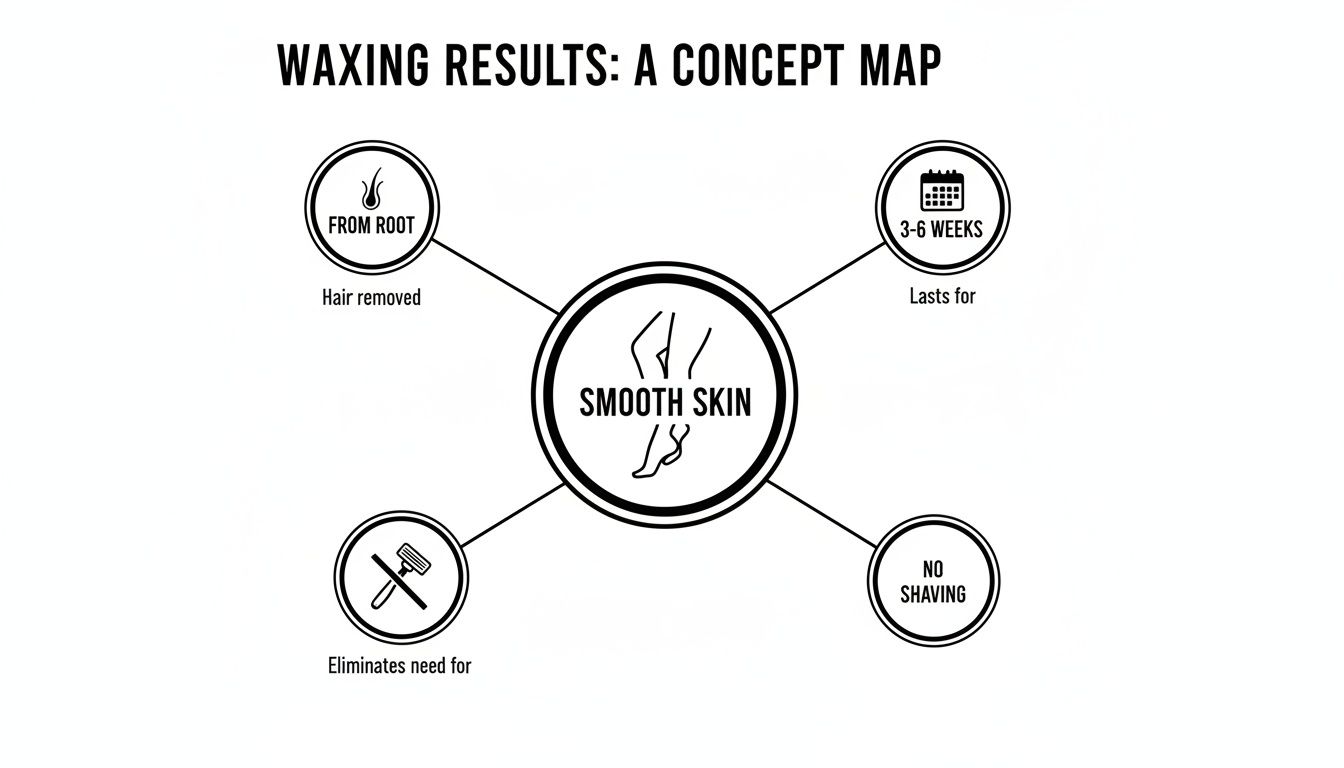
As the image shows, you get weeks of smoothness because the entire hair is removed from the root—something shaving just can’t do.
Why Syncing Your Cycles Is the Goal
When you first start waxing, your hair follicles are all over the place. Some are growing, some are resting, and some are in between. This is why you might see a bit of regrowth a week or so after your first appointment. It’s not the hair we just waxed, but the ones that were hiding under the surface, just about to enter their growth phase.
Once you've experienced waxing, you might wonder, how long does waxing last for different body areas?
Here’s where consistency becomes your best friend.
By sticking to a regular waxing schedule, usually every four to six weeks, you start to train your hair. Over time, you encourage more and more of your hair follicles to sync up and be in the anagen phase at the same time. This synchronisation is what gives you cleaner waxes and those long, gloriously smooth periods in between.
With each consistent appointment, your therapist can grab a higher percentage of hairs at the perfect growth stage. This disrupts the follicle more effectively, and over time, you’ll really see a difference. Many of our clients find that after a few months of regular waxing, their hair grows back softer, finer, and much more sparsely.
So, while a single wax is great, the real magic comes from sticking to a schedule. It turns hair removal from a chore into a smart strategy for keeping your skin effortlessly smooth.
Factors That Influence How Long Your Wax Lasts
When determining how long does waxing last, various factors come into play.

Ever wondered why your friend’s Brazilian seems to last an eternity while you spot regrowth much sooner? It’s not your imagination. The timeline for smooth skin isn't a one-size-fits-all number; it's a delicate balance of personal biology, lifestyle choices, and the expertise of your therapist.
Understanding these variables is the key to unlocking consistently longer-lasting results. Everything from your hair’s natural texture to hormonal fluctuations can shorten or extend that silky-smooth window. Let's dig into what truly determines the lifespan of your wax.
Your Unique Hair and Skin Type
The biggest factor is, without a doubt, your personal hair profile. Your genetics decide whether your hair is fine and sparse or thick and coarse, which directly impacts how quickly it grows back and how visible it is.
- Coarse or Thick Hair: This hair type has a much stronger root and a more stubborn follicle. It often reappears more quickly and is more noticeable when it does. The good news? Consistent waxing is the key to weakening these follicles over time.
- Fine or Light Hair: If your hair is naturally fine, you're in luck. Regrowth is usually slower, less dense, and far less obvious, meaning you can often enjoy that smooth feeling for longer between appointments.
Your skin type plays a part, too. Healthy, well-hydrated skin releases hair more easily during a wax, which means less breakage and a cleaner pull right from the root.
The Impact of Hormones on Hair Growth
Hormones are powerful messengers that control countless bodily functions, including your hair growth cycle. Any fluctuations can cause your hair to grow faster, thicker, or more sporadically, directly affecting how long your wax lasts.
Think of hormones as a volume dial for hair growth. Certain life stages and conditions can turn that dial right up, speeding up the anagen (growth) phase.
Key hormonal shifts that can impact your waxing results include puberty, pregnancy, menopause, and conditions like Polycystic Ovary Syndrome (PCOS). During these times, you might notice that hair grows back more quickly than usual, requiring slightly more frequent appointments to maintain smoothness.
Even your monthly menstrual cycle can have an effect. Some people find their skin is more sensitive during their period, while the hormonal shifts just before can sometimes accelerate hair growth. This is completely normal, and something an experienced therapist can help you navigate.
The Crucial Role of Professional Technique
Asking how long does waxing last can lead to better care practices for your skin.
While you can’t change your genetics or hormones, you can control the quality of your wax. The difference between a DIY attempt and a professional service is massive, and it all comes down to technique and the quality of the products used. A skilled therapist doesn't just slap on some wax; they perform a precise service designed for maximum effectiveness.
An expert knows how to:
- Apply wax correctly: They smooth it on in the direction of hair growth to properly grip every single strand.
- Ensure optimal temperature: The wax must be warm enough to stick to the hair but not so hot that it harms your skin.
- Remove strips effectively: A quick, clean pull against the direction of growth is what removes hair from the root instead of just snapping it at the surface.
Hair breakage is the absolute enemy of a long-lasting wax. When hair breaks, it’s no better than shaving—you'll see and feel stubble in days, not weeks. This is where professional expertise really makes all the difference.
Professional salon stats from Johannesburg clinics show an average hair-free period of 3-6 weeks for most body areas. This actually outperforms global averages by 10-15% because local therapists are experts at maintaining optimal wax temperatures of 57-60°C. This precision minimises breakage and maximises root removal for smoother, longer-lasting results. In Gauteng, with its high UV index, 70% of surveyed women reported at least 4 weeks of smoothness from leg waxes. You can discover more insights about the professional beauty market in South Africa.
Your Pre-Wax and Post-Wax Care
To ensure the best results, consider how long does waxing last and how you can maximize your aftercare routine.
Finally, how you prepare for your appointment and care for your skin afterwards has a huge impact. Think of it as a partnership between you and your therapist—you both have a role to play.
Proper preparation ensures the wax can adhere correctly, while diligent aftercare protects your skin and prevents issues that might interfere with your next session. And please, avoid shaving between appointments! It completely disrupts the growth cycle and makes your next wax less effective. Following a good routine sets the stage for success so you can enjoy every moment of that flawless finish.
An Aftercare Routine to Maximise Your Results

The real secret to making that incredibly smooth, just-waxed feeling last isn't just in the wax itself—it's in what you do after you leave the clinic. A solid aftercare routine is your best bet for getting the most out of your treatment, preventing irritation, and making sure your next session is even better. Think of it as protecting your investment in silky-smooth skin.
Right after a wax, your skin is at its most sensitive because the hair follicles are open and exposed. Giving it the right TLC during this window is absolutely essential for a beautiful, long-lasting result. If you skip the aftercare, you’re opening the door to bumps, redness, and ingrown hairs, which can definitely cut the lifespan of your smooth skin short.
The Crucial First 48 Hours
For the first two days after your appointment, your main goal is simple: be gentle. You need to avoid anything that could irritate your sensitised skin. This is the period when your skin is most vulnerable to bacteria and friction.
Just follow these simple rules to keep your skin calm and happy:
-
- Avoid Hot Water: Steer clear of hot baths, steamy showers, saunas, and jacuzzis. Heat can just make the skin angrier and increase redness. Stick to cool or lukewarm showers instead.
- Wear Loose Clothing: Tight clothes, especially synthetic fabrics, are a no-go. They trap heat and sweat while causing friction. Opt for loose, breathable fabrics like cotton to let your skin breathe and heal properly.
- Skip Intense Workouts: Heavy sweating can introduce bacteria into those open follicles, leading to potential breakouts or infections. It’s best to postpone that high-intensity gym session for a couple of days.
Recognizing how long does waxing last is an integral part of maintaining smooth skin.
- Stay Out of the Sun: Freshly waxed skin is much more likely to get sunburnt. Avoid direct sun exposure and tanning beds to prevent irritation and possible hyperpigmentation.
This initial period of gentle care really sets the stage for how long your waxing will last, making sure the area heals up without any drama.
In summary, understanding how long does waxing last will enhance your overall experience.
Your Long-Term Strategy for Lasting Smoothness
Once you’re past that initial 48-hour window, your focus shifts from protection to maintenance. A consistent long-term plan will not only keep your current results looking great but will also improve how future waxes turn out. The two pillars of this strategy are exfoliation and moisturisation.
Proper aftercare is a partnership between you and your therapist. While the wax itself removes the hair, your routine at home is what prevents ingrown hairs and keeps skin supple, making each subsequent treatment smoother and more effective.
Gentle exfoliation is your number one weapon against those annoying ingrown hairs. By sloughing away dead skin cells, you clear the way for new, finer hairs to grow through the surface without getting trapped underneath. Start exfoliating 2-3 times per week, beginning about two days after your appointment. You can use a mild scrub, a soft washcloth, or even a chemical exfoliant with ingredients like salicylic or glycolic acid.
To achieve the best results, remember to consider how long does waxing last in relation to your aftercare practices.
If you're looking for a more intensive approach to skin health, you can learn more about professional skin treatments that can complement your at-home routine.
Daily moisturising is just as crucial. Keeping your skin hydrated and soft makes it more pliable, which helps prevent hair from breaking during your next wax. A well-moisturised hair follicle lets go of the hair much more easily, giving you a cleaner removal right from the root.
Here is a simple, effective weekly plan to follow:
Finally, keep the question of how long does waxing last at the forefront of your hair removal journey.
- Daily Moisturising: Apply a gentle, fragrance-free lotion every single day to keep your skin soft and healthy.
- Scheduled Exfoliation: Pick two or three non-consecutive days (like Tuesday, Thursday, and Saturday) to gently exfoliate the waxed area.
- Listen to Your Skin: If you ever notice any irritation, dial back the exfoliation and focus on soothing, hydrating moisturisers.
By dedicating just a few minutes each week to this routine, you’re actively helping your wax last longer and ensuring every appointment gives you that flawless, long-lasting smoothness you're after.
Comparing Waxing, Shaving, and Laser Hair Removal: How Long Does Waxing Last?
Choosing how to get rid of unwanted hair can feel like a massive decision. You’ve got options that range from quick daily fixes to long-term investments, so it’s important to figure out what fits your lifestyle, budget, and skin goals. Let's break down the three most popular choices to see how they really stack up.
Shaving, waxing, and laser hair removal all promise smoother skin, but they get there in completely different ways. The method, how long the results last, and the overall experience vary so much that each one is suited for a different kind of person.
Shaving: The Quick but Temporary Fix
Shaving is easily the most common and accessible way to remove hair. It’s fast, you can do it at home, and the initial cost is low. But here’s the catch: the results are incredibly short-lived.
A razor simply slices the hair off at the surface of the skin. Since the root is left completely untouched, you’ll probably feel that familiar stubble returning within 24 to 48 hours. This means you’re stuck with daily or almost-daily maintenance to stay smooth, which often leads to skin irritation, razor burn, and nicks.
Waxing: The Semi-Permanent Smoothness
Waxing is that fantastic middle ground. By pulling the hair out directly from the root, it gives you weeks of silky-smooth skin—typically lasting anywhere from 3 to 6 weeks. This process also weakens the hair follicle over time, which is why regrowth often comes back finer, softer, and less dense.
Yes, there's a bit of discomfort involved, and you need to let your hair grow to a certain length before a session. But for many, the long-lasting results are a trade-off they’re more than happy to make. It’s far more affordable than permanent solutions and leaves a much cleaner, smoother finish than shaving.
The key difference is simple: shaving is like mowing a lawn, while waxing is like pulling out the weeds. One offers a temporary trim, while the other removes the problem from its source for a much longer period.
This is exactly why so many people in Johannesburg choose waxing. It offers consistently smooth skin without the daily hassle of reaching for a razor.
Laser Hair Removal: The Long-Term Solution
Many clients wonder, how long does waxing last compared to other hair removal methods?
For anyone looking for a more permanent reduction in hair growth, laser hair removal is the ultimate goal. This method uses focused beams of light to target and damage the hair follicles, which dramatically slows down their ability to grow hair back.
After a full series of sessions, most people see a huge reduction in hair, with many achieving results that are close to permanent. While it does require a bigger upfront investment in both time and money, the long-term freedom from regular hair removal is a massive win. If you're curious about the process, you can explore professional laser treatments that deliver these lasting results.
Comparing Hair Removal Methods at a Glance
To make your decision a little easier, here’s a straightforward, side-by-side comparison of what each method brings to the table. This chart breaks down what you can realistically expect in terms of results, cost, and the commitment involved.
Duration of Results:How Long Does Waxing Last?
| Feature | Waxing | Shaving | Laser Hair Removal |
|---|---|---|---|
| Duration of Results | 3–6 weeks | 1–3 days | Months to years (permanent reduction) |
| Best For | Long-lasting smoothness on a budget | Quick, daily maintenance | Permanent hair reduction |
| Average Cost | Moderate per session | Low initial cost | High initial investment |
| Pain Level | Moderate, temporary sting | Minimal to none | Mild to moderate discomfort |
| Effect on Hair | Grows back finer and sparser | Grows back blunt and coarse | Drastically reduces regrowth |
| Time Commitment | Every 4-6 weeks | Daily or every few days | Multiple sessions, then maintenance |
Ultimately, the best choice really boils down to what you value most. If you’re after affordable, long-lasting smoothness with very little daily effort, waxing is an unbeatable option. It perfectly balances the fleeting results of shaving with the high commitment and cost of laser hair removal.
Why Professional Waxing Delivers Superior Results
While at-home waxing kits might seem like a convenient shortcut, the difference a professional service makes is night and day. Investing in a treatment at a trusted Johannesburg clinic isn’t just a luxury; it’s a smart move for better, safer, and much longer-lasting results.
What you're really paying for is expertise. A trained therapist knows how to work with different hair growth patterns and skin types, transforming a simple hair removal chore into a proper skincare experience. This is what turns the question "how long does waxing last?" into a confident "weeks longer than any DIY attempt."
The Power of Professional Technique
The single biggest reason a salon wax beats a home kit is the prevention of hair breakage. When hair snaps off at the surface instead of being pulled from the root, you might as well have shaved. The stubble will be back in just a couple of days.
A professional therapist is a master of the details:
- Correct Application: They know how to apply the wax in the exact direction of hair growth, making sure every single strand is properly gripped.
- Swift Removal: Using a quick, clean pull against the grain is key to removing the entire hair, root and all. This is the secret to that long-lasting smoothness.
- Skin Support: Knowing precisely how to hold the skin taut is a skill that minimises pain, prevents bruising, and makes the whole experience far more comfortable.
This meticulous technique is what guarantees you walk out with truly smooth skin that stays that way for weeks, not just days.
Superior Products and Impeccable Hygiene
Professional clinics also have access to high-quality waxes that are worlds away from the stuff you find in stores. An experienced therapist will pick a wax specifically for your skin and the area being treated—whether it’s a gentle hard wax for sensitive spots or an efficient soft wax for larger areas like your legs.
The professional difference is clear: expert technique prevents hair breakage, high-quality products protect your skin, and strict hygiene standards ensure a safe, effective treatment every time. This combination delivers consistently smooth results that last.
On top of that, hygiene in a professional setting is absolutely non-negotiable. Reputable clinics follow strict sanitation protocols, using disposable applicators and maintaining a sterile environment to protect your skin from bacteria and potential infections.
This commitment to safety is a cornerstone of professional service and one of the best reasons to avoid the risks of at-home waxing. You can explore the full range of professional beauty treatments to see just how much of a difference expertise makes across the board.
A Few Common Questions We Get About Waxing
Even when you know the basics, it's completely normal to have a few last-minute questions before your waxing appointment. Getting the answers sorted beforehand helps you walk in feeling confident and ready, making the whole experience much more comfortable. Here are some of the most common things our clients in Johannesburg ask us.
Does Waxing Hurt More the First Time?
Honestly, yes, the first time is usually the most sensitive—but it gets so much easier from there. Think of it like pulling a stubborn weed from hard, packed soil for the first time; it takes a bit more effort.
Many wonder, how long does waxing last and if it becomes less sensitive over time.
With each session, the experience gets way more comfortable. Regular waxing actually weakens the hair follicle, so the hair that grows back is finer and comes out with much less of a fight. Our expert therapists also have plenty of tricks up their sleeves to minimise any discomfort.
What Should I Do About Ingrown Hairs?
The number one rule is: don't pick at them! Squeezing or digging at ingrown hairs can easily lead to scarring and infection. Prevention is a much better strategy.
Starting a couple of days after your wax, gently exfoliate the area two or three times a week. A mild scrub or a product with salicylic acid works wonders. This simple step clears away the dead skin cells that can trap new, softer hairs under the surface. Keeping your skin moisturised every day also helps those new hairs pop through properly.
Can I Shave Between Waxing Appointments?
We really, really advise against it. Shaving completely throws off the hair growth cycle we work so hard to get in sync with your waxing schedule. When you shave, you’re just cutting the hair at the surface, which makes the tip blunt and coarse again.
Shaving between waxes basically hits the reset button on all your progress. It can cause more irritation at your next appointment and make it feel almost as sensitive as your very first one.
To get the best, longest-lasting results, just let the hair grow. It only needs to be about the length of a grain of rice for us to work our magic. If you want to see our full range of services, you can check out our full clinic pricelist for all the details. Sticking to a consistent schedule—without shaving—is the real secret to keeping that smooth, flawless finish for as long as possible.
So, as you prepare for your next appointment, consider how long does waxing last and plan accordingly.
Ready to experience consistently smooth skin with professional care? At Linksfield Laser Clinic, our friendly and highly trained technicians are here to give you a comfortable and effective waxing service that’s tailored just for you. Book your appointment today and discover how long does waxing last with our expert touch.